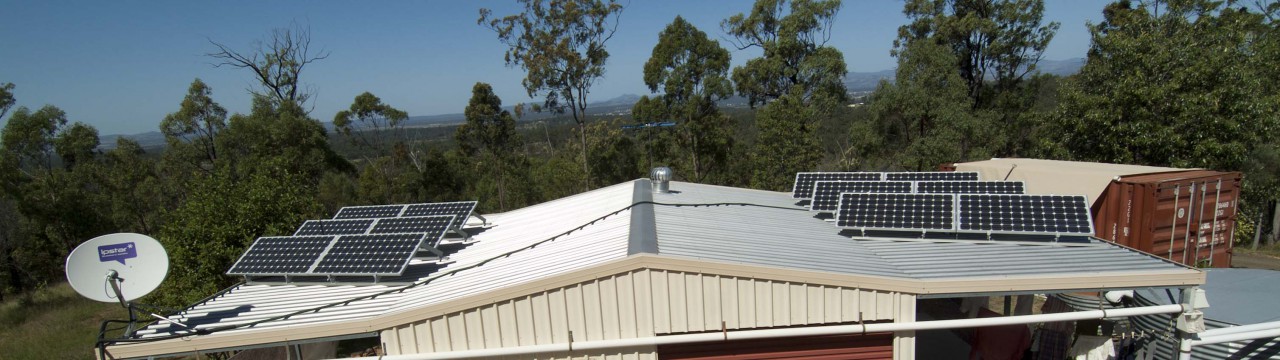
Lockyer Valley cited as an example of sustainable and resilient action in the face of climate change

There’s an article in The Conversation today on Fire and flood: how home insurance can help us adapt to climate change that refers to the fact that after a natural disaster home insurance allows a home to be replaced on-site on a “like-for-like” basis, and life carries on as usual.  And it’s that “life as usual” aspect of it that is the problem.  The site has the same disaster risk as before and, to the extent that local planning laws allow, the new house has the same risk profile as before.  And house insurance premiums keep climbing because of the risk profile of so much of the housing stock in the face of increasingly extreme weather conditions arising from climate change.

The article suggests that the solution may lie in action taken through the

“… critical relationships that bring together the different players involved in insurance, housing provision, climate adaptation and disaster management.

They will be required to work together with various stakeholders in bravely and innovatively deciding how and where we redesign and build more resilient Australian communities. The plan to relocate homes in the ravaged township of Grantham in the Lockyer Valley is an Australian first and exemplary of how such initiatives might work through land-swaps.

There will be an uncomfortable period of transition; communities in urban areas have an inertia to them that means change is slow. Even as new safe havens pop up, they will not be available to everyone immediately. Weathering our climate change future will require a response that involves all Australians.”

I completely agree, having long thought that we need to use natural disasters as a catalyst for a process that recognises past errors in planning and design and moves, in stages if necessary, to a more sustainable and resilient situation.

Go to

to read the full article by Stewart Williams, University of Tasmania

Can we have a sustainable Lockyer Valley without addressing climate change?

There’s plenty of time to get on top of climate change, right?

If we look at the priority the population gives to electing a government truly committed to doing something about climate change then it comes in at around 4th or 5th in their priorities.  On the other hand, observation of the political parties, both historically and in relation to their election promises, real action on climate change, likely to have significant effects within the necessary time frame, is hardly on the agenda.

I’m always heartened driving through the suburbs (whether in the capital cities or in small country towns) by the view of solar panels on roofs.  The proportion of houses with solar PV or solar hot water continues to increase, and this seems to me to be, at least in part, a visible statement of a commitment to do something concrete about reducing global warming.

However when I look at the generality of lifestyle and buying patterns of the average person, I don’t see any real recognition of the urgency for action, or of the scale of the action required.

Do we really understand the enormity of the changes that are happening?  Happening now, not some time in the future when climate change happens?  Yes, I know, climate change is happening now and has been happening for the last 50 years at least, but behaviour and the language used in talking about climate change suggests that it is still a way off in the future.

Well, here’s the reality:

The planet is building up heat at the equivalent of four Hiroshima bombs worth of energy every second. And 90% of that heat is going into the oceans.  Right now.  Not in ten years, or fifty years.  It’s happening now.

Scary stuff, and I would guess that some readers are going, “yeah, yeah, you’re just trying to scare us into taking action and it isn’t true”.  Read on (the following is extracted from an article by David Holmes in today’s issue of The Conversation):

“John Cook, a climate scientist based at University of Queensland teamed up with oceanographer John Church and several overseas scientists to make an astonishing calculation, which unfolds like this:

Ninety percent of the excess heat trapped in our atmosphere by greenhouse gases is actually absorbed by our oceans and ice. Without the oceans, that heat would be in our atmosphere. But because of the oceans, we can underestimate climate change.

Wikimedia/National Archives

The Cook team measured the amount of heat the oceans have absorbed in Joules. In terms of visualising warming, Joules are not very meaningful. So the team chose to convert ocean warming into a release of energy etched into the collective memory of the 20th century – the nuclear bomb dropped on Hiroshima.

And the maths of this is quite disturbing. The equivalent of the heat released by 345,600 Hiroshima bombs is absorbed by the earth every day, or four bombs every second. Ninety per cent of the heat released by those bombs is going into the ocean.”

The full article is available here.

Back to the question in the title of this blog – can we have a sustainable Lockyer Valley without addressing climate change?  “Sustainable” that doesn’t include realistic and necessary actions to reduce greenhouse gas emissions is not sustainable at all, but rather a short-term fix to make us feel more comfortable about the way we live.

Do we need to be paying high prices for unsustainable electricity?

Alex Wonhas (Director of Energy Flagship at CSIRO) has an article in today’s issue of The Conversation on options for Australia’s energy future.  Apart from the need to cut greenhouse gas emissions in order to avoid runaway climate change, high and increasing electricity prices should be a major driver for changing the way we generate and distribute energy.

As Wonhas points out:

Over the past five years electricity prices have risen more than 60%. This is due to a combination of factors, but upgrades of electricity networks are the main driver for the increases. At times, we as consumers chose to use this expensive infrastructure in an inefficient way. Network infrastructure worth $11 billion across the National Electricity Market is only used for an estimated 100 hours per year of peak demand.

Australia needs a pricing system for electricity that signals the true network costs to households and businesses. We also need to remove barriers to deploying solutions that can enhance energy productivity and reduce costs.

Many solutions already exist that could make our electricity system more efficient.

The full article is well worth reading.

Why climate change is not an environmental issue

This video was brought to my attention by mikestasse over at Damn the Matrix.  It makes a very important point: climate change is a national security issue, not an environmental issue.  There are no trade-offs to be made between “the environment” and economics/development in regard to climate change. This is about the future of human civilization and quite likely the habitability of the Earth for both humans and many of the species currently existing.  Climate change not only doesn’t respect borders – extreme climate change, which is where we are headed now without major and quick action, will make national borders meaningless and destroy national economies.

It is edited and narrated by Ryan Louis Cooper and inspired by an article by David Roberts.

Peak oil, fracking and the fate of technological society

Been a while between posts – mostly due to ongoing shoulder problems causing chronic pain and a resultant lack of interest in doing anything that requires focussed concentration.  Now I have discovered that the physical posture associated with sitting meditation takes the pressure off the damaged areas and virtually eliminates the pain – possibly for 12 hours or more, so more blogging may be on the way.

I’ve just been reading a great post by the Archdruid, addressing the apparently increasingly widespread view that coal seam gas and shale oil fracking have solved the world’s fossil fuel dilemma by permanently banishing the spectre of peak oil and, starting with the US, have put us back on the road to endless technological progress and economic growth.  The reality, as he says so eloquently is that:

… technological progress, as well as the sciences that helped to make it possible, are subject to the law of diminishing returns; furthermore, that what has been called progress is in large part a mere side effect of a short-term, self-limiting process of stripping the planet’s easily accessible carbon reserves at an extravagant pace, and will stop in its tracks and shift into reverse as those reserves run short; more broadly, that modern industrial society is in no way exempt from the common fate of civilizations.

Click HERE to read a very well argued presentation of the evidence that the reserves can be produced using fracking and other CSG technologies are within the predicted long tail of fossil fuel reserves that would become accessible once prices were sufficiently high, and make no difference to the arrival of peak oil or the eventual outcome.

Who wants to prepare for the future?

This article by Liese Coulter from The Conversation seems like a pretty accurate take on how most of us deal with some of the difficult issues in our (the World’s) future.  Rather relevant at this time of annual reviewing of the past year and making resolutions about our future actions.

_________________________

For most of us, preparing for the future means having a retirement fund and health coverage, choosing our preferred tree change or sea change option and keeping on the good side of the relatives who will eventually pick out our nursing home. For the most part we don’t want to think about these things at all, as anyone who has tried to talk this over with their partners has probably found out.

Talking about preparing for a future affected by climate change is even less welcome a topic and many of the same considerations hold true.

We know there will be some big-impact events but not when and where they will happen. The Australian Climate Change Science Program (ACCSP ) produces great technical information but not what I need on a personal level. Looking at the Climate Change in Australia website I can get a general idea of the risks I face from higher temperatures and changed rainfall patterns over the coming decades, but not what to actually expect in any given year. How can I reduce the risk? Having a high-set Queenslander house reduces my risks of climate impacts from very hot weather and flooding while I live on the Brisbane flood plain.

On the same level, the National Stroke Foundation shows my changing risk as I age, but not for certain if I will have a stroke. With my family history of diabetes and heart disease, my risk is high. But I also know that by keeping fit and eating light, I can improve my chances.

Preparing for both ageing and for climate change involves managing the risks and deciding what we are willing to change and what we are willing to chance. Mostly we don’t want to think about either one and like to see difficult times as far off in the future.

How much we do not want to think about dealing with impacts from climate change was brought home to me through a series of casual conversations in 2007, where I mentioned newly released climate projections for 2050. I could see people mentally counting in their head and then say “I’ll be dead then!” as a big smile spread across their face.

When this kept happening no matter where I travelled, I came to think that many people would rather be dead than have to face what we expect from climate change.

In the same way, when young people express a horror at the prospect of getting old, they picture the losses in reduced options and opportunities, without appreciating the benefits gained over a lifetime. As old age gets closer our attitudes change along with our expectations. A fit and well off 70-year old can have a very good day, but he is still 70. Someone in 2050 dealing with unpredictable weather patterns, fewer food options and having to learn new job skills will likely have different expectations than we do now and can still have a very good day.

In some ways I think we have a failure of imagination looking at the climate-affected future. We have seen climate change as something to be stopped, that global warming could be avoided if we reduce greenhouse gas emissions to the atmosphere.

Now weather patterns have started to change and emission reductions aim to keep the changes from reaching a dangerous level, even as some climate impacts have become unavoidable. Changes have been set in motion through inertia in the climate system and emissions absorbed in the oceans that will enter the atmosphere over the coming decades.

The small and large choices we make each year will shape how prepared we are to meet new challenges. Like ageing, the key to adapting to climate change is to act now to increase our capacity to enjoy the benefits and opportunities, and decrease our vulnerability to the negative impacts.

When I picture myself at 70 I have an image of my parents and grandparents at that age but with the benefits of better nutrition and medical care. What is more difficult is picturing the world around me. The very tricky thing about adapting to climate change is knowing what to expect, expressed in the standard disclaimer for financial products, “past performance is not necessarily indicative of future results”. That has not stopped us investing for our retirement but it will be even more important as we prepare for climate change.

_________________________

Author Disclosure Statement

Liese Coulter works for the National Climate Change Adaptation Research Facility (NCCARF). She is affiliated with the Australian Science Communicators (ASC) and the Public Communication of Science and Technology network (PCST).

_________________________

This article was originally published at The Conversation.
Read the original article.

The Conversation

We are funded by CSIRO, Melbourne, Monash, RMIT, UTS, UWA, Canberra, CDU, Deakin, Flinders, Griffith, La Trobe, Murdoch, QUT, Swinburne, UniSA, USQ, UTAS, UWS and VU

A carbon tax that cuts greenhouse gas emissions AND the budget deficit

I know it is physically a long way from the Lockyer Valley to Ireland.  The link is that both are subject to carbon taxes – and the difference is that the Irish carbon tax is cutting greenhouse gas emissions and making a significant contribution to reducing government debt.  And it’s not just carbon taxes: a range of environmental impacts whose cost is usually externalised by those responsible for creating them (meaning that we all pay for those impacts, whether we had a part in causing them or not), are now being charged to the source, whether it is a business or private individuals.

The following is taken from an article by Elisabeth Rosenthal in the New York Times  of December 27.

Over the last three years, with its economy in tatters, Ireland embraced a novel strategy to help reduce its staggering deficit: charging households and businesses for the environmental damage they cause.

The government imposed taxes on most of the fossil fuels used by homes, offices, vehicles and farms, based on each fuel’s carbon dioxide emissions, a move that immediately drove up prices for oil, natural gas and kerosene. Household trash is weighed at the curb, and residents are billed for anything that is not being recycled.

Derek Speirs for The New York Times

The Irish now pay purchase taxes on new cars and yearly registration fees that rise steeply in proportion to the vehicle’s emissions.

Environmentally and economically, the new taxes have delivered results. Long one of Europe’s highest per-capita producers of greenhouse gases, with levels nearing those of the United States, Ireland has seen its emissions drop more than 15 percent since 2008.

Although much of that decline can be attributed to a recession, changes in behavior also played a major role, experts say, noting that the country’s emissions dropped 6.7 percent in 2011 even as the economy grew slightly.

“We are not saints like those Scandinavians — we were lapping up fossil fuels, buying bigger cars and homes, very American,” said Eamon Ryan, who was Ireland’s energy minister from 2007 to 2011. “We just set up a price signal that raised significant revenue and changed behavior. Now, we’re smashing through the environmental targets we set for ourselves.”

… when the Irish were faced with new environmental taxes, they quickly shifted to greener fuels and cars and began recycling with fervor. Automakers like Mercedes found ways to make powerful cars with an emissions rating as low as tinier Nissans. With less trash, landfills closed. And as fossil fuels became more costly, renewable energy sources became more competitive, allowing Ireland’s wind power industry to thrive.

Even more significantly, revenue from environmental taxes has played a crucial role in helping Ireland reduce a daunting deficit by several billion euros each year.

The three-year-old carbon tax has raised nearly one billion euros ($1.3 billion) over all, including 400 million euros in 2012. That provided the Irish government with 25 percent of the 1.6 billion euros in new tax revenue it needed to narrow its budget gap this year and avert a rise in income tax rates.

Although first proposed by the Green Party, the environmental taxes enjoy the support of all major political parties “because it puts a lot of money on the table,” said Frank Convery, an economist at University College Dublin. The bailout plan for 2013 requires Ireland to embrace a mix of new tax revenues and spending cuts.

Not everyone is happy. The prices of basic commodities like gasoline and heating oil have risen 5 to 10 percent. This is particularly hard on the poor, although the government has provided subsidies for low-income families to better insulate homes, for example. And industries complain that the higher prices have made it harder for them to compete outside Ireland.

“Prices just keep going up, and a lot of people think it’s a scam,” said Imelda Lyons, 45, as she filled her car at a gas station here. “You call it a carbon tax, but what good is being done with it to help the environment?”

The carbon tax is levied on fossil fuels when they enter the country and is then passed on to consumers at the point of purchase. The automobile sales tax, which ranges from 14 to 36 percent of a car’s market price depending on its emissions, is simply folded into the sticker price.

That sent manufacturers racing to reduce emissions. Automakers like Mercedes and Volvo began making cars with high-efficiency diesel engines that shut off rather than idle when they stop, for example. “For manufacturers it’s all, ‘How low you can get?’ ” said Donal Duggan, a brand manager at an MSL showroom near central Dublin.

Other emissions taxes on cars, including the annual car registration fee, or road tax, are billed directly to customers, potentially adding thousands to annual operating costs. Ninety percent of new car sales last year were in the two lowest-emission tiers.

The taxes on garbage had an immediate impact. In Dun Laoghaire Rathdown County in southeastern Dublin, each home’s “black bin” for garbage headed to the landfill is weighed at pickup to calculate quarterly charges. Green bins for recyclables are emptied free of charge.

“There was a big furor initially, but now everything I throw out, I think, ‘How could I recycle this?’ ” said Tara Brown, a mother of three.

How much of a crisis does Australia have to experience before we have a government that has the guts to introduce a real and effective carbon tax?