An Introduction to Permaculture Course in the Lockyer Valley

The Citizens of the Lockyer (a community group in the Valley) is planning to run an Introduction to Permaculture course over two consecutive Sundays in October.  The teacher will be Tom Kendall, who taught the Permaculture Design Certificate course that I did in June-July this year.

Tom grew up on an 11,000 acre wheat and sheep farm at Grasspatch, north of Esperance in Western Australia, which he took over after his father retired.  In 2000 he sold the farm and moved to the Sunshine Coast, where in 2005 he bought the property that is now Maungaraeeda and developed it as a permaculture-based operation.

I posted earlier about my impressions of Tom’s PDC course in July.  You can see some photos of Tom’s farm in that post.  In my overview I said:

Did the course change my life?  Yes, and a lot more than I had expected – not in the sense of an epiphany or even a change of direction, but in giving me more confidence that I now have a good theoretical and practical grounding for achieving the goals we have set for our property; and the knowledge that I have someone I can turn to for advice in the future.

This will be an excellent opportunity to learn about permaculture from an experienced practitioner, without having to travel far. Participants will become more aware of methods to become resilient and efficient in their farming/vege gardening operations and will be inspired to become more self reliant.

Francine Chanovre (another of Tom’s PDC graduates who lives at Ingoldsby) and I have been talking for a while about setting up  Lockyer Permaculture Group where people can share ideas and experiences relating to permaculture.  Perhaps the Citizens of the Lockyer’s Introduction to Permaculture course will be a springboard for setting up such a group.

The course will be held at the Stockyard Creek Community Hall.

Proposed dates: Sunday 13 and Sunday 20 October 2013, 6 hours per day plus breaks.

Proposed program:

Day 1:

9.00 – 10.30 am – Introduction to the ethics and philosophy behind Permaculture and definitions for terms commonly used in Permaculture.

11.00 – 12.30 pm – Relative location – How each element performs many functions and each important function is supported by many elements.

1.30 – 3.00 pm – Efficient energy planning and how to effectively use biological resources in a Permaculture system.

3.30 – 5.00 pm – Question time.

Day 2

9.00 – 10.30 am – Energy cycling to achieve closed cycle systems; small scale intensive systems for urban and suburban Permaculture applications.

11.00 – 12.30 pm – Accelerating succession and evolution; diversity, edge effect and attitudinal principles in Permaculture.

1.30 – 2.30 pm – Resources and yield; composting and effective soil management.

3.30 – 5.00 pm – Question time.

Slides and photos will highlight practical applications. Discussion of subjects is encouraged at any time during the day.

Tom Kendall is an inspiring teacher.  In addition to his farming background he has qualifications as well as experience in applying permaculture.

In 2008 he completed a Permaculture Design Certificate with Bill Mollison (one of the founders of permaculture) and Geoff Lawton. He followed that up early 2010 with a Teacher Training Course with Geoff Lawton.

Tom is a very practical person with an wealth of knowledge about shaping landscapes and creating tools and infrastructure. Having spent all his life working the land he has an astute awareness about today’s environmental issues and aims to minimise his footprint as much as possible. His courses are unique in that he shows a lot of practical applications on his property, a Permaculture Demonstration Site, to complement the theory taught. He combines Bill Mollison’s and Geoff Lawton’s teachings with his own agricultural and self reliance experience without any spiritual connotations.

His aim is to bring Permaculture to as many people as possible, and to empower people to be self reliant.

You can visit his web site at www.permaculturesunshinecoast.org

Cost: the Citizens of the Lockyer will subsidise approximately 40% of the cost of the course. If 15 or more people sign up, it will cost participants only $100 for the two day course. This is exceptional value for a course of this scope.

To book your place, email cp.stephens@skymesh.com.au as soon as possible (but before 27 September), indicating your wish to attend.

Remember – the final date for bookings will be Friday 27 September.

Lockyer Valley cited as an example of sustainable and resilient action in the face of climate change

There’s an article in The Conversation today on Fire and flood: how home insurance can help us adapt to climate change that refers to the fact that after a natural disaster home insurance allows a home to be replaced on-site on a “like-for-like” basis, and life carries on as usual.  And it’s that “life as usual” aspect of it that is the problem.  The site has the same disaster risk as before and, to the extent that local planning laws allow, the new house has the same risk profile as before.  And house insurance premiums keep climbing because of the risk profile of so much of the housing stock in the face of increasingly extreme weather conditions arising from climate change.

The article suggests that the solution may lie in action taken through the

“… critical relationships that bring together the different players involved in insurance, housing provision, climate adaptation and disaster management.

They will be required to work together with various stakeholders in bravely and innovatively deciding how and where we redesign and build more resilient Australian communities. The plan to relocate homes in the ravaged township of Grantham in the Lockyer Valley is an Australian first and exemplary of how such initiatives might work through land-swaps.

There will be an uncomfortable period of transition; communities in urban areas have an inertia to them that means change is slow. Even as new safe havens pop up, they will not be available to everyone immediately. Weathering our climate change future will require a response that involves all Australians.”

I completely agree, having long thought that we need to use natural disasters as a catalyst for a process that recognises past errors in planning and design and moves, in stages if necessary, to a more sustainable and resilient situation.

Go to

to read the full article by Stewart Williams, University of Tasmania

GE, GM, …. no way. And here’s why.

Despite what I said in my last post here about getting back to reporting on actions in the Lockyer Valley, by us or others, that contribute to sustainability and letting go of the “big issue” stuff, some things are just so locally relevant (well, of course it all is, but you know what I mean) that they can’t be ignored.

In a valley where a multitude of crops are grown on an industrial scale, we need to be continually reminded of the very real dangers associated with genetically modified crops.  To that end, I feel compelled to re-blog the following from Jerry Coleby-Williams’ always thoughtful and informative blog.  It’s a letter that he wrote to the Courier-Mail back in 2005, but its relevance is timeless – and thanks to Jerry for including references for key facts.  There are a lot of bloggers, particularly in permaculture, who need to learn that backing up their statements with credible sources will motivate people to adopt and spread their message.

Here’s Jerry’s letter to the C-M:

“Biodispersal – Another word for the dictionary

Unlike Dr Marohasy (‘Let’s be smart on genetic crops, Courier Mail, 22.11.05), I’ve learned to be cautious about what governments, scientists and businesses say about new technologies.

I well remember British scientists announcing that nuclear power was going to be so cheap, safe and effective that electricity would be supplied free.

I’ve heard much pontificating about the edenic opportunities that genetic engineering (GE) offer Australia. GE will allow us to tailor diseases to exterminate vermin, reduce chemical use, improve crop yields, etc.

Smart Techniques. Pinpoint Accuracy, 100% Satisfaction Guaranteed. Simple, just trust in our technology. We Can See The Future.

So how accurate a technology is GE? How much thought has gone into the consequences of its use?

The history of our previous field experimentation in Australia give us clues as to how these things work. Either the proponents of GE are aware of the dangers and are hiding them, as did the Maralinga nuclear testers, or they are as blissfully ignorant as the introducers of the cane toad.

In the 1950’s and ‘60’s atomic weapons research was the equivalent of GE: cutting edge technology. It was hard to argue for caution without being labelled a commie, a nut, or both.

The Maralinga Tjarutja, then not even Australian citizens, were forced from their traditional land to make way for British nuclear tests: safe, controlled field trials of new technology.

Plutonium 239 loses half of its radioactive strength every 24,000 years. The testers knew that it would be safe for the Maralinga Tjarutja Aboriginal people to reoccupy their homelands after a mere quarter of a million years.

There is an almost rustic charm about nuclear pollution and feral vermin, like the cane toad. You know what they are, you know what they do and you know that their behaviour is governed by natural laws.

This is NOT true of GE. A few years ago a German biotechnology company genetically engineered a soil bacterium, Klebsiella planticulata, to decompose organic waste and at the same time generate ethanol for use as fuel. Before field trials began this new GE life form was tested in real, living soil in a laboratory.

This was very unusual: normally such tests would be done in sterilised soil. Every single plant that was grown in soil innoculated with the GE Klebsiella died. The new life form affected all the mycorrhizal fungi present in the soil.

These microscopic fungi interact intimately with plant roots assisting plant nutrition and health. Without them soil is practically useless to plants. Critically, had normal tests been completed in sterilised soil no such results would have been seen. Field trials in the natural environment would have followed. A GE life form, capable of making soil inhospitable to plant life, would have been released into the world.

In October 2002, a large dust storm, apparently visible from space, and carrying millions of tonnes of soil, stretched from northern Queensland to southern NSW and spread soil east as far as New Zealand. Dust storms carry many things apart from soil: micro-organisms, pollen, seed, eggs, spores and, perhaps, a pinch of Plutonium 239. So had this Klebsiella been trialled in Australia it might have become our Christmas gift to New Zealand.

If two supposedly geographically isolated bioregions can share genetic material so easily, it seems that a ‘controlled field trial’ is more soft terminology than hard science. In 1999 the first GE Superweeds – wild turnips (Brassica rapa) – were identified in Britain, following the ‘controlled field trials’ of a GE crop of canola (Brassica napus). These two plants share a variety of insect pollinators which spread GE pollen from crop to wild plants which then inherited a gene for herbicide resistance which they in turn passed to the next generation.

Until the advent of GE, the scientific definition of a species was a life form with a unique genetic makeup that had developed to survive the environment and ecosystem within which it had evolved over time. Natural laws of inheritance ensured that a species is genetically distinct and tends to avoid hybridising with other species. The more distantly related species are the more unlikely it is that hybridisation will occur between them: so far barramundi have never crossbred with eucalypts.

Genes defining a species were contained within its population to be inherited – vertically – down the generations, from parents to offspring. The natural world is now a laboratory where a new phenomenon – horizontal gene transfer between species, between genera, phyla and kingdoms – seems both easy and expected.

Small wonder apologists like Marohasy are spinning like mad: they need to pollute Australia with GM in order to end all precautionary State GM bans. Currently GM technology is about profit and avoiding having to pay for cleaning up your own pollution.

Every new technology has a downside that is discovered AFTER its application: atomic energy generates nuclear waste; pesticides give us bioaccumulation of poisons. With pesticides we invented the word ‘bioaccumulation’ to describe the phenomenon of pesticide residues and pesticide breakdown products accumulating towards the top of the food chain.

So here’s a new term for the movement of pollution from GE – ‘biodispersal’ – for the new phenomenon of modified genes weaving their way unpredictably across the laws of natural inheritance and widely dispersing themselves throughout the web of life on Earth.

I’m all for improving our knowledge on genetics, that is genuine, ethical, hard science. But GM technology is inherently unsafe and unnecessary and we urgently need laws to compel GM business to pay for cleaning up their pollution”.

Jerry Coleby-Williams Dip. Hort. (Kew), RHS, NEBSM, HMA, MAIH Director, Seed Saver’s Foundation

‘Bellis’ – Brisbane’s sustainable house & garden

References used and further information on GM, see the Office of the Gene Technology Regulator, P.O. Box 100, Woden, ACT 2606, www.ogtr.gov.au.

* ‘Maralinga: The Fall Out Continues’, produced by Gregg Borschmann, ABC ‘Background Briefing’, April 2000. Transcript was posted at: http://www.abc.net.au/rn/talks/bbing/stories/s120383.htm

* ‘Naked Ape to Superspecies’, by David Suzuki and Holly Dressel, published by Allen and Unwin, 1999, ISBN 1865081957, The David Suzuki Foundation, Suite 219, 2211 West 4th Avenue, Vancouver, British Columbia, V6K 4S2, Canada;

22nd November 2005

Future directions?

I’m starting to think I’ll get this blog back to issues on sustainability more directly related to the Lockyer Valley.  I know that the big issues that I’ve been canvassing of late have everything to do with whether or not life and land use in the Lockyer Valley are sustainable – only someone with tunnel vision could deny it.  But my original aim in starting this blog was to give an account of our attempts, and those of others in the Lockyer, to live and work more sustainably.

And I have to admit that right now, ground down as I am by the pitiful spectacle that our political masters are making of themselves in this election campaign, I yearn for simpler issues.  Maybe I’ll start another blog about the big issues, and maybe it could contain other material, like just how much Australia has moved away from being the country of the “Fair go” for all.  Or maybe not …

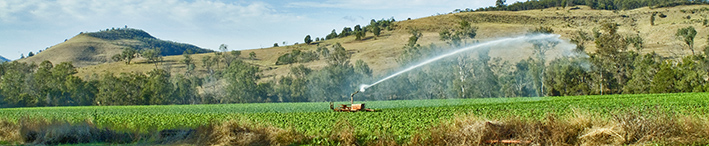
Anyway, to start on the path to simpler things, here’s what seems to me to be a typical view of the Lockyer Valley.  It’s one of the rejects from a photographic assignment I did five or six years ago.  No title needed.

WaterCannon_DSCF0955_BLOG small

What’s behind the major weakness in governance in Australia? And why does it matter?

The following is reblogged from today’s issue of The Conversation.  It describes the major governance factor preventing good decision-making that would lead to sustainable use of Australia’s resources – at all levels, from local government right through to national.

It is affecting our economy, our environment, our quality of life, and our individual finances – and it is destroying the future for our children and grandchildren.  Yet the tools that we need to change the situation are now available.  This should be the major election issue, but it isn’t even on the radar for either of the major parties or the majority of the minor parties.

A more sustainable Australia: measuring success

By Carl Obst, University of Melbourne and John Wiseman, University of Melbourne

A more sustainable Australia. As the 2013 election campaign continues, we’ve asked academics to look at some of the long-term issues affecting Australia – the issues that will shape our future.

How successful is Australia? You’d think we’d have a fairly easy answer to that – you could get it by looking at our gross domestic product, or GDP. But over the years we’ve gained a number of other success indicators, from health and wellbeing, to the environment, and they often tell a different story.

In 1968, US senator Robert Kennedy observed that GDP “measures everything … except that which makes life worthwhile”. These days not many experts believe GDP is enough to measure whether a country is succeeding.

It’s obvious that we should be using a winder range of progress measures. The real question is why we still struggle to bring those measures into decision making. Why don’t we take it for granted that all decisions must balance economic, social and environmental factors as a matter of course?

Why do we struggle?

People have a collective lack of willingness to think long term, beyond five to ten years. This is the normal state of humanity – we dislike change. This approach works well when external conditions pose no obvious threat. But this means we can end up like the frog in hot water, which doesn’t realise the water is warming until it’s too late.

We tend to assume that whatever is the case now will remain the same. This leaves us in a difficult position when some of the things we depend on, such as functioning environments and societies, gradually deteriorate.

Another problem is that these problems are collective, rather than individual. This means that when resources are used by everyone – such as ocean fisheries, or the atmosphere – self-interest always wins out and the resources suffers. This, known as the tragedy of the commons, continues to be a major problem for global resources.

We also fear things we believe are complex. Our approach to complexity is to divide it up: we find it easier to consider economic, environmental and social aspects independently. We can become quite expert in each one. But we lose the ability to consider all factors simultaneously. It makes it difficult for leaders to make balanced decision when these aspects have all become separated.

Reinforcing this separation, we have developed information that does not support balanced, integrated decision making. For example, over the past 50-60 years economic information has had a significantly larger weight in decision making, notwithstanding the significant increase in the amount of social and scientific data over the same time period.

Combined with the tendency to short attention spans, this leads to more weight being placed on information about current activity (such as income and consumption) rather than longer term drivers of change such as the condition of public infrastructure, the environment and social capital. We have information on the condition of these assets but it tends to not be integrated or organised in a meaningful way. That makes it hard to use it efficiently in standard analytical and related frameworks – let alone broader public debate.

The consistent recording of trends over time provides information to assess past decisions, correct mistakes and visualise the future. In the wonderful words of Abraham Lincoln, “If we could first know where we are, and whither we are tending, we could then better judge what to do, and how do to it”.

Developing the habit of recording past events in a structured and widely disseminated fashion also has the significant side effect of reducing apparent complexity. There is nothing simple about the economic system or the measure of GDP that we use to reflect its performance. But we are now attuned to it and thus, as a collective, see the economy through a different lens to the one we use for environmental or social issues.

How do we adapt our point of view?

One solution would be to change human nature. This is likely to be a tough ask. A more practical approach is to record trends in economic, environmental and social factors, on which we can base decision in the future.

Fortunately, new frameworks for this sort of data collection are being implemented in Australia and globally. In 2012 the United Nations statistics group adopted an international statistical standard: the System of Environmental-Economic Accounting (SEEA). It integrates environmental data (such as flows of water, energy, waste, and emissions and stocks of natural resources) with the standard measures of economic activity.

This SEEA provides an information base for other indicators, such as resource efficiency and sustainable consumption, and inclusive and comprehensive wealth. It could also be used in standard analytical tools such as economic modeling and cost benefit analysis.

Further research has shown the potential to integrate ecological information with standard economic accounting. In particular, we need to consider environmental and economic data for small areas (such as forests, farms, or wetlands).

This integration of environmental, economic and social information at local scales could drive changes in the way we consider decision making at national and international scales. At local scales we deal better with complexity, since there are fewer unknowns and we have a greater interest in thinking for the long term since the impact of decisions and choices affect us directly.

Australia has a small yet strong tradition in environmental-economic accounting and has been a leading country in the development of the SEEA and other measurement frameworks. This work should be encouraged, supported and more actively co-ordinated to build nationally accepted histories of our relationships with the environment.

We need a comprehensive and regular Australian land and ecosystem assessment program along the lines of the recently commenced UK National Ecosystem Assessment. This would first entail dividing Australia up into regions of different land and ecosystem types, such as forests, agricultural land, wetlands, and coastal zones.

Then, using a variety of indicators we would:

  • assess the quality and change in quality of those ecosystems
  • assess the type and quantity of ecosystem services (such as food, fibre, air and water purification, and recreation) provided by those ecosystems.

While there are a number of related initiatives in Australia, these need to be co-ordinated, regularised and resourced through institutions. Maybe then we can stop thinking about the short-term, and start thinking about the future.

Thanks to the Sustainable Australia Report 2013 for inspiring this series.

Carl Obst was the editor and lead author for the United Nations System of Environmental-Economic Accounting (SEEA) from 2010-2013 and continue to work on a consultancy basis for international organisations that are implementing the SEEA as an international standard.

John Wiseman is a Professorial Fellow with the Melbourne Sustainable Society Institute (MSSI), University of Melbourne.

The Conversation

This article was originally published at The Conversation.
Read the original article.

Inspiration for simple/different construction – the house of three tents

Check out this place:  https://www.youtube.com/watch?v=toFBj9qBLQo

Sorry I can’t find a way to embed the video in this post (any suggestions welcome), but I think this place is pretty amazing.  No, not for the opulence of the setting and some of the furnishings, but for the vast array of building ideas that it sparks for me.

No need to buy the frame, it looks pretty simple to make. Even some non-structural pine framing from Bunnings would still be pretty cheap.  Add recycled windows from the secondhand timber yard.

No need to buy or make the tents, maybe old advertising banners would cover the frame equally well.

How about the pipe work on the deck.  Looks an awful lot like I could build the same with some steel fence pipe sections and fittings and some cage mesh from the hardware.

I love it when the videos show so much of the construction details.  This is definitely filed away in the “inspirational ideas” folder.

Can we have a sustainable Lockyer Valley without addressing climate change?

There’s plenty of time to get on top of climate change, right?

If we look at the priority the population gives to electing a government truly committed to doing something about climate change then it comes in at around 4th or 5th in their priorities.  On the other hand, observation of the political parties, both historically and in relation to their election promises, real action on climate change, likely to have significant effects within the necessary time frame, is hardly on the agenda.

I’m always heartened driving through the suburbs (whether in the capital cities or in small country towns) by the view of solar panels on roofs.  The proportion of houses with solar PV or solar hot water continues to increase, and this seems to me to be, at least in part, a visible statement of a commitment to do something concrete about reducing global warming.

However when I look at the generality of lifestyle and buying patterns of the average person, I don’t see any real recognition of the urgency for action, or of the scale of the action required.

Do we really understand the enormity of the changes that are happening?  Happening now, not some time in the future when climate change happens?  Yes, I know, climate change is happening now and has been happening for the last 50 years at least, but behaviour and the language used in talking about climate change suggests that it is still a way off in the future.

Well, here’s the reality:

The planet is building up heat at the equivalent of four Hiroshima bombs worth of energy every second. And 90% of that heat is going into the oceans.  Right now.  Not in ten years, or fifty years.  It’s happening now.

Scary stuff, and I would guess that some readers are going, “yeah, yeah, you’re just trying to scare us into taking action and it isn’t true”.  Read on (the following is extracted from an article by David Holmes in today’s issue of The Conversation):

“John Cook, a climate scientist based at University of Queensland teamed up with oceanographer John Church and several overseas scientists to make an astonishing calculation, which unfolds like this:

Ninety percent of the excess heat trapped in our atmosphere by greenhouse gases is actually absorbed by our oceans and ice. Without the oceans, that heat would be in our atmosphere. But because of the oceans, we can underestimate climate change.

Wikimedia/National Archives

The Cook team measured the amount of heat the oceans have absorbed in Joules. In terms of visualising warming, Joules are not very meaningful. So the team chose to convert ocean warming into a release of energy etched into the collective memory of the 20th century – the nuclear bomb dropped on Hiroshima.

And the maths of this is quite disturbing. The equivalent of the heat released by 345,600 Hiroshima bombs is absorbed by the earth every day, or four bombs every second. Ninety per cent of the heat released by those bombs is going into the ocean.”

The full article is available here.

Back to the question in the title of this blog – can we have a sustainable Lockyer Valley without addressing climate change?  “Sustainable” that doesn’t include realistic and necessary actions to reduce greenhouse gas emissions is not sustainable at all, but rather a short-term fix to make us feel more comfortable about the way we live.

Here’s an element of sustainability that should be a major election issue

Do you keep a three-month stockpile of food in your house, including a freezer with frozen foods, or perhaps you are a keen permaculture gardener with a well stocked backyard?  Is there a stockpile of petrol in the backyard (this might be illegal where you live)?

Do you depend on having an essential prescription filled by your local pharmacy when you run out?  If you had a sudden medical emergency, would you assume that you could receive immediate treatment in a hospital that was well stocked with pharmaceutical supplies?

According to a report  on Australia’s Liquid Fuel Security, prepared by Air Vice-Marshal John Blackburn (Retired) and released by the NRMA in February this year, if Australia’s oil supply was cut off:

  • dry goods could run out within nine days;
  • chilled and frozen goods could run out within seven days;
  • retail pharmacy supplies could run out within seven days;
  • hospital pharmacy supplies could run out within three days; and
  • fuel available to the public could run out within three days.

This is because Australia is one of the few developed nations that lacks a standard stockpile of fuel reserves.

The report highlights the nation’s dependence on foreign oil and fuel.

NRMA Motoring & Services Director Graham Blight said 85 per cent of Australia’s transport fuel comes from overseas crude oil or imported fuel.

This is a major sustainability issue, not just at the national level but also at the individual household level.  We can’t do much about the national issue, apart from raising it as a factor in the current election campaign.  However, at the household level it is one that we can prepare for.

If you haven’t got a large pantry (or even if you have) what about setting aside another cupboard – maybe clear some shelves in your linen cupboard, or get rid of the junk in those bottom drawers to make space – and set up a stock of dry goods, with each category arranged in use-by date.  You’d be surprised how far off the “best before” date is for a lot of dry and canned foods.  You can then rotate these into your pantry as needed and make a note on your shopping list to fill the gap in your stockpile the next time you go shopping.

How about starting a permaculture garden in the backyard; or joining a community garden; or asking if you can start a garden in that unused lot down the street.  And start growing staples first, not exotic herbs or fruits that you seldom eat.  That way you have a garden you not only can rely on in an emergency, but also one which makes an ongoing contribution to better nutrition.

Of course if you are in a suburban situation it is unlikely you will be able to grow significant quantities of a wide range of foods, but you might be able to link up with other gardeners to exchange excess produce of one type for something that you don’t grow.

From a permaculture principles point of view, the problem contains solutions – the fact that we have had a series of shortsighted national governments resulting in no liquid fuel reserves – contains the solutions to a whole lot of issues (emergency shortages, inadequate fresh foods in our diet, need for more outdoor exercise, not enough community linkages).  Addressing all of these through stockpiling, growing some of our own food, and establishing links within the community also increases resilience.

[Update Edit 9/8/13:]

For an idea of how little it can take to tip countries into an emergency situation based on the lack of liquid fossil fuels have a look at this report by Kathy McMahon in August 2006, on her blog Peak Oil Blues.  She provides a detailed account of the impact on the UK in 2000 when oil supplies were cut off by public action.  It all started when some French fishermen blockaded the English Channel as a protest against high fuel prices.  They were joined by truckers and farmers who were similarly angry about fuel prices and blockaded refineries and distribution centres throughout Europe.

England was possibly the most affected country and within nine days of the first protests:

  • Enormous lines appeared at gas stations as panic buying spread across the country on day 4;
  • Over half of Britain’s gas stations were closed by day 6, 90% by day 9;
  • Food stores experienced the same wave of panic buying, forcing supermarkets to close or impose rationing;
  • Hospitals suspended all but emergency care and began to run out of blood and essential supplies;
  • Mail delivery and public transportation operated on reduced schedules;
  • Heavy industries — auto manufacturers, steel plants, aerospace plants and the like — began planning immediate cutbacks, layoffs and closures as they ran short of fuel, parts, raw materials and workers who could get to work [quoted from: Transition Voice]

This summary gives only an indication of the nature and extent of the impact.  For a more nuanced description read Kathy McMahon’s material.

Reading her material should lead you to greatly expand the list of measures that you need to take to be ready for interruptions to the fossil fuel supply.  Such interruptions will not necessarily come about through the actions of terrorists, and certainly will occur well before the oil actually “runs out” (it never will, but the price will become prohibitive for all practical purposes).
In nine days, from 5 September to 14 September 2000, a small number of angry people brought one of the major developed economies to its knees.  This needs to be remembered when governments are considering their policies in relation to peak oil.  It is not safe to assume that people will “adapt” to rising fuel prices brought on by diminishing supplies.  As Kathy McMahon says:

“We are facing a life or death situation that creates both an intellectual and emotional strain. Even this brief look into the British Petrol Sedition tells an interlocking and devastating tale of what an oil shortage looks like. It tells a frightening tale of the power held in the hands of a small number of emotional, angry people who feel that their very livelihoods are being challenged by high oil prices and want their governments to do something about it.”

I am grateful to Tom Lewis at Transition Voice who re-posted from original article at The Daily Impact (which includes a podcast version), for bringing Kathy McMahon’s excellent article to my attention.  Her article is fully referenced, so it constitutes a rich vein of material on the topic.

Why Permaculture?

That’s a reasonable question: why are we adopting a permaculture approach to the way we “farm” on our stony ridge top?

A post on Eric Krasnauskas’ blog Science Pope in early July spelled out a lot of reasons for adopting permaculture, though I hasten to add that the post doesn’t set out to justify a permaculture approach – the word doesn’t even appear in the page. By the way, it’s well worth reading the About section of Science Pope – Eric Krasnauskas is one interesting guy, and we need a lot more like him if we are going to change the direction the world is going.

I was alerted to Eric’s post through my subscription to Transition Voice (they re-blogged it the other day) – and they do have a quite a lot to say about permaculture.

Anyway, back to our reasons for adopting permaculture, in addition to wanting to be part of the solution to the mess described in the aforementioned post (and to survive its climax), we think that the only ethical approach is to tread as lightly as possible on the Earth, and to respect all the life forms and natural processes of the planet.

Here’s what Eric Krasnauskas thinks of the future of the economy, and while he may be talking mainly about the US, his summary applies pretty much to the  global capitalist model generally.

Re-blogged from Science Pope:

The economy isn’t coming back

Posted on July 10, 2013 by mrchumpy

Presently Americans wait with bated breath, watching sales numbers and unemployment statistics, grasping for signs that an economic recovery is underway. We search for signals that indicate we’re growing, that there will be a job for everyone who wants one, and that the United States will resume the prosperity and standing in the world it once had.

We wait in vain.

Sometimes it takes a cartoon character to show the absurdity of our global economic system
(click the image to play video)

The economy isn’t coming back. On the contrary, it’s a patched-together mess on its way to the crapper. Though the Obama administration might crow about a tepid recovery, even today’s insufficient economy is itself a lie, propped up by governments printing money to buy their own bonds and simulate growth. The Dow ascends to ever more lofty heights, and yet few believe it’s tied to improving conditions for regular people. China, the economic engine of the world, is now slowing precipitously, and experiencing serious market declines and confidence problems. Europe is an economic mess, and when the EU eventually implodes (it really is a when and not an if), it will send shocks through the rest of our globalized world.

To try and remedy our situation, every government is of course promoting growth. We continue to push the lie that we’ve all internalized but have never spoken: that we could have infinite growth on a finite planet. Expecting infinite from the finite is an absurdist proposition, one that falls apart for the same reason the world economy has stalled: resource constraints. It might seem preposterous to talk about resource constraints, when we in the Western world are surrounded by endless abundance. After all, don’t we have the choice of ten different kinds of kitchen sponges, and 20 types of diet soda?

Yet if you can look past the bounty of the supermarket shelf, there are really dire resource shortages advancing from all sides. For example:

oilOIL

Oil is the lifeblood of modern civilization…and it’s running out. The world’s biggest fields are running dry, leaving humanity to scrape the bottom of the barrel with high effort-low reward energy options like Tar Sands and fracking. Peak Oil is and always has been a real thing, so if you’re unfamiliar with the concept I’d recommend a quick introduction.

waterWATER

Oil may be civilization’s lifeblood, but water is life itself — and it too is becoming scarce as sources are ravaged by climate change and rampant overuse. Water will be more valuable than oil in the future, and already conflicts over water rights are common. You might shrug and assume I’m talking only of sources in arid regions like the Middle East and North Africa, but even within the United States the water wars have begun.

09farmlandLAND

Right now rich countries are buying up huge tracts of land in poorer countries, primarily to grow food and ship it back home. These countries, of which China is the most prolific, need this extra production because as their population and consumption levels skyrocket, they are increasingly unable to feed their people. Exacerbating the problem is the fact that  humanity is pissing away its topsoil, making much of Earth’s arable land worthless.

Oil, water, land…these are the basic building blocks of modern civilization, and all three are in serious jeopardy. Everyone knows the economy is terrible right now, yet for each person you’d no doubt get a different opinion about the cause — lazy people, corporate abuses, excess regulation, automation, corruption, partisanship in Washington, the list goes on and on. But step back for a moment and consider the fact that what’s unfolding is much more fundamental: our output is so low because our inputs are dwindling. Beyond even the fundamental inputs outlined above, there are dozens of other key shortages contributing to our economic woes like phosphorus (fertilizer), rare earth metals (electronics), fish, and copper. All of those are legitimate crises in their own right; taken together, it’s the death knell for a growth-based economy.

A brief interview with author Richard Heinberg, who explains this stuff much better than I do
click the image to play video (7:20)

So I put to you again: the economy we knew isn’t coming back. As our resources run out, prices will skyrocket and we will no longer be able to afford those that come from far-flung places after winding their way through an energy-intensive distribution system. In a world where every calorie of food you consume requires 10 calories of energy to produce, package, and transport, your Chilean Sea Bass and your Saudi Arabian oil will share the same fate.

But though our growth economy cannot survive, if we are diligent and inventive a new economy may bloom in its stead. The future of the world is local: economic inputs like food and energy will be produced in your local community. Prosperity will be found within worker cooperatives, which often perform much better than traditional businesses in times of economic turmoil. Things will not be easy, and there are no silver bullets here. Saying goodbye to the growth paradigm will be scary and strange, because it’s really all we’ve ever known. But I feel confident that with grit, determination and a bit of luck we’ll find our way through to something better on the other side.

Preserving Food – and how to avoid botulism

Preserving excess food is one of the cornerstones of a sustainable lifestyle.  I used to do a lot of preserving of stone fruit when I lived in country Victoria, but those days are gone, along with the antique Fowlers preserving set.

Now that we are trying to establish a permaculture lifestyle I think the time has come to get back to preserving food, not least so we have a more varied back-up larder to increase our food independence.

There was a good blog post by Farmer Liz over at Eight Acres the other day, with consideration of the pros and cons of preserving fruit, vegetables, and meat.  Farmer Liz concluded that with our climate (Southeast Queensland) allowing us to produce vegetables pretty much all year round, there’s no reason to preserve vegetables.

Meat isn’t usually preserved (canned) in Australia, possibly because it’s always available (if you are getting yours from the butcher or supermarket) and can always be dried or smoked.  Personally I’d rather store my meat by keeping it on the hoof (or claw) till it’s needed.  If we buy meat in bulk we tend to freeze it, and when we finally get some chooks, if we ever have to kill more than one then they’ll go in the freezer too.

Speaking of meat, we just bought a quarter of a Low-line Angus and it’s in the freezer now, all bagged up in daily serves.  We have friends who raise this breed of beef cattle in an ecologically sustainable (pasture fed on cell grazing) and humane way, and market them by the quarter.  Not that you have to buy a front quarter or a back quarter, but you get a quarter of all the cuts from the animal.  It’s a nice feeling to know where our meat comes from and how it was raised, even to the point of having seen the paddocks that it grazed.  The fact that we are supporting friends who are members of our community is an additional consideration.  More and more farmers seem to be changing over to specialty marketing of sustainably produced bulk meat.

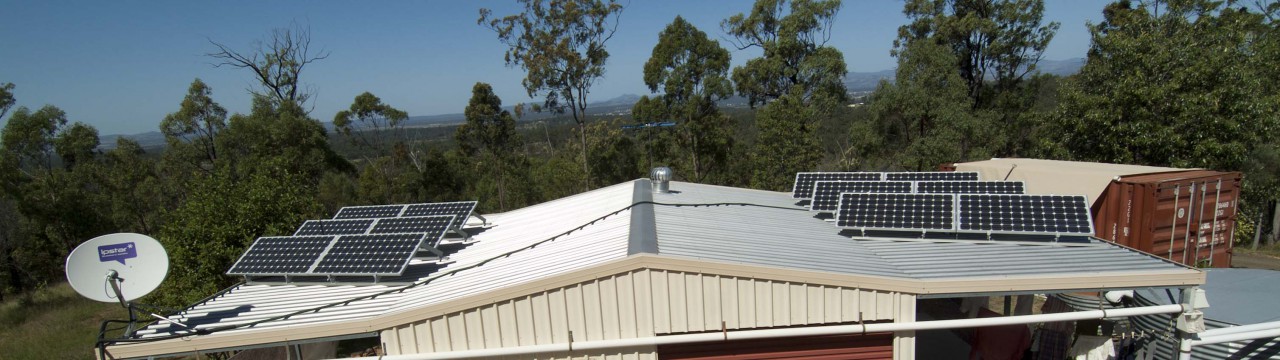
Aren’t we worried about blackouts and losing all the food in the freezer?  Not while we are off the grid and on solar power – and own a generator that can take over from the solar batteries if the need ever arises (it hasn’t).

When the floods hit in 2011 (remember the disastrous Grantham/Toowoomba floods in the early part of that year) we were cut off for days, and when we eventually got out to the supermarket pretty much all the shelves were bare.  All of the people on the electricity grid had experienced days of no power, but our solar power kept right on going.  We didn’t even have to run the generator to top up the batteries (I thought about doing it, just to be on the safe side, but a mouse had made its home in the alternator and it and the wiring got fried when I turned the generator on).  Anyway, we had a quarter of a cow in the freezer and about three-months’ supply of non-perishables in the pantry, so being cut off wasn’t a problem.

The subject of preserving meat always starts a discussion on botulism.  Botulism is caused by the bacterium Clostridium botulinum, which can occur in the soil, the bottoms of waterways, or in the intestines of mammals such as humans, cattle and horses.  The spores are not killed by boiling.  However botulism is uncommon because special, rarely obtained conditions are necessary for botulinum toxin production from C. botulinum spores, including an anaerobic, low-salt, low- acid, low-sugar environment at ambient temperatures – the kind of habitat you might find in a container of badly preserved meat, for instance.

While I was thinking about preserving, Northwest Edible Life (another of my regular reads) came out with a post on “How Not to Die from Botulism”.  It’s a must-read if you are doing any preserving, and is useful generally if you are regularly preparing or storing food.  You can find the blog here  and you can download a full-size pdf file of the poster below here.

Avoiding botulism